Do you need motorcycle insurance? Yes, you do. It protects you financially if you have an accident and is legally required in most states. Riding without insurance can lead to fines and suspension of your riding privileges. This blog discusses why motorcycle insurance is essential and explains the legal requirements across different states.
Key Takeaways
- Motorcycle insurance is essential for legal compliance and financial protection, covering costs from accidents and potential liabilities.
- Insurance requirements vary by state, with many mandating minimum liability coverage, highlighting the importance of understanding local regulations.
- A comprehensive motorcycle insurance policy includes liability, collision, and comprehensive coverages, alongside optional protections like uninsured motorist and roadside assistance coverage.
The Necessity of Motorcycle Insurance

Owning motorcycle insurance is crucial for riders, as it not only adheres to state laws but also provides financial safety in case of accidents. This includes covering costs related to bike repairs and legal liability should injuries occur. Riding without insurance can expose you to substantial economic risks, such as litigation and the possibility of personal bankruptcy.
Though possessing motorcycle insurance is compulsory in certain jurisdictions, the specifics may differ by state. Operating your bike without proper coverage might result in severe penalties or the loss of your riding privileges. Appropriate protection through an insurance policy safeguards against financial strain and legal trouble, allowing for a legal and confident riding experience.
A comprehensive motorcycle insurance plan also offers extensive coverage while on the road. This includes everything from bodily harm compensation and property damage restoration to optional protections like roadside assistance—helping turn what could be serious setbacks into manageable issues instead of catastrophic financial losses.
Legal Requirements Across States
Every state has different insurance regulations, and some have stricter mandates than others. While some states, such as Florida, do not mandate insurance, it’s still highly advised due to the risks associated with riding uninsured. In most states, motorcyclists are required to carry proof of insurance to avoid penalties like fines or suspension of their riding privileges.
The type and cost of motorcycle insurance required depend on your state’s laws. Understanding these regulations is key to avoiding legal problems while ensuring you’re properly covered in case of an accident.
Mandatory Liability Insurance
Many states legally require motorcyclists to have liability insurance, which serves as financial protection against injury or property damage caused to others. States like Virginia, New York, Texas, and Georgia impose compulsory minimum levels of liability coverage. Failing to comply with these laws can lead to heavy penalties and significant financial consequences.
Liability insurance typically covers both property damage and bodily injury to others. The minimum coverage for property damage is usually around $5,000, while bodily injury coverage per person is typically $15,000.
Adequate liability coverage not only ensures compliance with the law but also protects you from potential litigation and financial hardships arising from accidents. Meeting these minimums is not just about legal compliance; it’s about ensuring your financial security while riding confidently.
States with Unique Rules
Every state has its own set of rules concerning motorcycle insurance, and some have regulations that differ considerably from what’s typical. Take Florida as an example. It doesn’t mandate motorcyclists to hold insurance. Nevertheless, securing financial protection through insurance is strongly advised due to the inherent risks involved in riding a motorcycle without coverage.
The minimum levels of coverage required or particular kinds of mandated insurance can vary across states. Gaining knowledge about these distinct requirements will assist you in making more informed choices regarding your motorcycle insurance needs, enabling you not only to be sufficiently protected but also to adhere strictly to regional legal obligations while enjoying your ride.
Key Components of a Motorcycle Insurance Policy

Motorcycle insurance policies include several essential coverages that provide significant protection for riders. These components include liability insurance, collision coverage, and comprehensive coverage. Together, these cover the costs of accidents, repairs, medical bills, and legal fees resulting from collisions.
One important component is gap coverage, which covers the difference between your motorcycle’s actual cash value and your remaining loan balance if your bike is totaled in an accident. This coverage helps protect you from carrying unpaid debt after an accident.
Liability Insurance
Liability insurance, often a minimum requirement in most states, covers damages and injuries caused to others during an accident, making it critical to any policy. For instance, bodily injury liability insurance covers medical expenses for injuries and repair costs for property damage liability, ensuring that you are financially protected from the repercussions of an accident.
It includes coverage for damage to another vehicle and bodily injuries to others. Minimum coverage levels are set to meet basic financial responsibilities.
Liability insurance ensures financial security for unforeseen expenses from accidents beyond just meeting legal requirements.
Collision Coverage
Collision coverage is a type of insurance that provides monetary assistance for the repair or replacement expenses of your motorcycle following an accident. This protection shields you from having to pay the entire cost of repairs on your own, regardless of whether it’s a trivial scrape or a significant collision with another vehicle or object.
Incorporating encounters with either vehicles or stationary objects, this coverage serves as crucial financial safeguarding. It plays an indispensable role in preserving the condition of your motorcycle and facilitates its prompt restoration to operational use post-accident.
Comprehensive Coverage
Comprehensive coverage protects against non-collision incidents like theft, vandalism, and natural disasters, covering a wide range of potential threats.
It assists with repair or replacement costs after non-collision incidents, ensuring financial security. This coverage is crucial for full protection, on and off the road.
Optional Coverages to Consider

If you require motorcycle insurance, it’s crucial to know that the fundamental coverage offers necessary protection. Your policy can be bolstered by opting for additional coverages, which serve to provide an added layer of security and comfort. Should your motorcycle need repairs, rental reimbursement coverage is a valuable addition that will take care of the costs for a substitute vehicle during this period.
Opting for special add-ons within your insurance policy introduces distinct benefits tailored towards enhancing rider safety and making the experience of riding more pleasant. By incorporating these extra coverages into your plan, you’re ensuring comprehensive protection encompassing an extensive spectrum of potential risks.
Uninsured/Underinsured Motorist Coverage
Uninsured/Underinsured Motorist Coverage is essential for motorcyclists, offering protection and ensuring they receive compensation when involved in accidents with drivers who lack sufficient insurance.
Given the prevalence of uninsured motorists on the streets, this type of insurance coverage is crucial. It safeguards riders from having to shoulder the financial burden resulting from collisions caused by another individual’s inadequate insurance.
Medical Payments Coverage
Medical payment coverage helps with medical expenses for the rider and passengers, reducing out-of-pocket costs for hospital visits, surgeries, and rehabilitation, including guest passenger liability insurance. It also assists with rehabilitation costs after an accident, making it a valuable addition to your policy.
Roadside Assistance
Emergency roadside assistance reduces both the hassle and expense of breakdowns, commonly offering services such as towing, jump-starting batteries, changing flat tires, and providing fuel. This support guarantees that if a motorcycle breaks down, it can swiftly and securely resume travel.
By incorporating roadside assistance into your plan, you equip yourself for unforeseen incidents while riding. It serves to enhance your overall motorcycle experience by making it more seamless and anxiety-free.
Factors Influencing Insurance Premiums
Several factors affect your motorcycle insurance premiums, including the type of coverage, your experience as a rider, your driving record, and even the make and model of your motorcycle. Riders with a clean driving record and more experience often pay lower premiums, while a history of accidents or violations can increase your costs.
The type of motorcycle you own also plays a role in determining premiums. Higher-value bikes or those with high-performance features typically result in higher insurance rates due to increased risk.
Your location and how often you use your motorcycle can also impact your premiums. Urban areas, with higher traffic and accident rates, generally lead to higher premiums. Frequent use of your motorcycle increases your exposure to accidents, which can raise your insurance costs.
Rider Experience and Driving Record
A rider’s experience and driving record significantly impact premiums. A clean record usually results in lower premiums, while a history of accidents or violations can raise costs. Maintaining a clean record helps keep premiums manageable, highlighting the importance of safe riding and adherence to traffic laws.
Type of Motorcycle
The make and model of a motorcycle significantly influence premiums, which are affected by the bike’s value and safety ratings. High-performance modifications often increase costs due to higher accident risks.
Higher motorcycle usage often correlates with increased accident likelihood, impacting rates. Understanding these factors helps riders choose a bike that balances performance with insurance costs.
Location and Usage
Geographical location and usage frequency critically influence insurance rates. Urban areas with higher crime rates or more traffic accidents typically face higher premiums. Frequent motorcycle use can lead to higher rates, as more time on the road increases accident risk.
Awareness of these factors helps riders make informed decisions about coverage and find ways to lower premiums.
Custom-built and Modified Motorcycles
Custom-built or altered motorcycles come with particular challenges in the realm of insurance, often carrying higher premiums because of the specific risks tied to their specialized components and upgrades. The presence of greater horsepower in these motorcycles typically results in a rise in premium costs due to a heightened risk of accidents. Crash safety ratings can affect pricing. Motorcycles that boast superior safety ratings may benefit from reduced insurance costs.
It is essential for owners to grasp the necessary insurance stipulations for modified and custom-built motorcycles to secure sufficient coverage. To guarantee comprehensive protection should there be a claim, it’s crucial that all modifications are fully disclosed.
Performance Modifications
Disclosing performance modifications ensures full protection in case of a claim. Failure to disclose can lead to denied claims, leaving you financially vulnerable. Performance modifications can increase premiums due to heightened risk.
Use your insurer’s app or website to upload photos and receipts of modifications. This documentation is crucial for verifying modifications and ensuring adequate compensation.
Cosmetic Accessories
List all cosmetic accessories in your policy to ensure accessories coverage. Unlisted accessories may not be reimbursed if damaged or stolen. The cost of cosmetic accessories can be significant, as shown by a rider who spent $2,000 on custom paint and decals.
Custom equipment coverage is important as it covers the repair or replacement of custom parts if damaged or stolen. This coverage protects the considerable investment in customizing a motorcycle, ensuring your bike remains unique and adequately insured.
Proof of Insurance and Consequences of Non-Compliance

Motorcycle riders are obligated to possess proof of insurance, which can be in the form of a physical card or an electronic version that can be displayed on smartphone apps. This is a legal requirement in numerous states, with places such as California and Texas recognizing digital proofs, thus simplifying adherence for motorcyclists.
If riders neglect to have their insurance proof on them, they could face significant repercussions such as monetary penalties, suspension of their license, and even the impounding of their motorcycle. Presenting counterfeit evidence of insurance might lead to harsher punishments, including fines reaching $750, license revocation, and possibly incarceration.
Carrying Proof of Insurance
In numerous states, it is a legal mandate to have proof of car insurance. States such as California and Texas permit the use of digital proof through smartphone applications, offering riders the ease of always having their insurance verification readily available.
Having your car insurance documentation with you helps avoid sanctions and ensures adherence to state regulations, safeguarding you from monetary penalties and additional consequences.
Penalties for Lack of Insurance
Operating a motorcycle without the proper insurance can result in severe repercussions. If caught, you could face substantial fines, suspension of your license, or even impoundment of your bike. Initial fines for not being able to provide proof of insurance may begin at $200 and can increase with subsequent offenses. Presenting false evidence of insurance coverage might incur stringent penalties such as up to $750 in fines, driver’s license suspension, and the possibility of imprisonment.
To steer clear of these punitive measures, it is imperative that you secure valid motorcycle insurance and consistently have proof on hand when riding your motorcycle. Doing so ensures adherence to legal requirements while safeguarding yourself against financial risks associated with accidents or violations.
Reporting a Motorcycle Accident
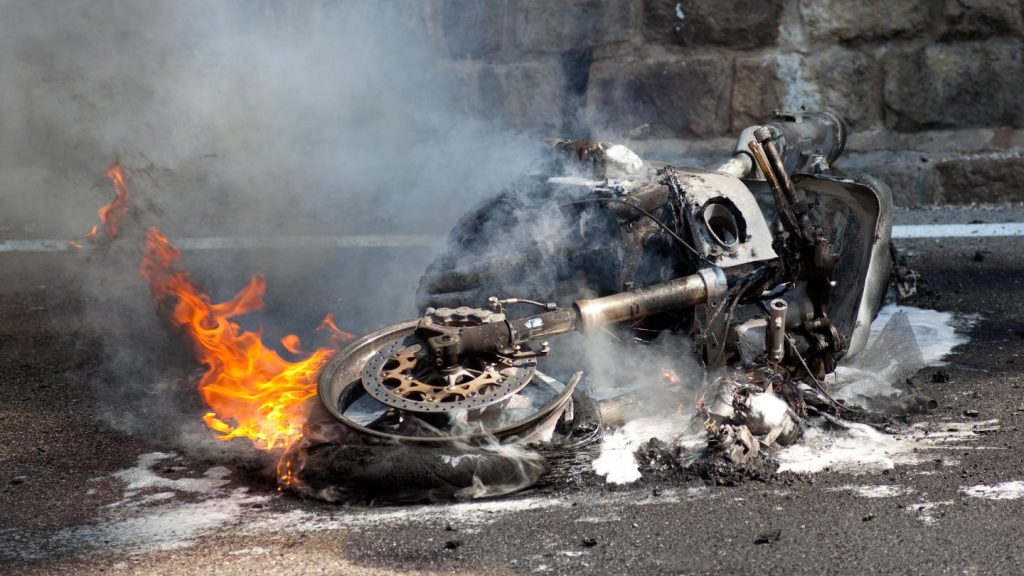
It is imperative to handle the procedures following a motorcycle accident with care, as this greatly influences the outcome of insurance claims and legal matters. Being equipped with the necessary documentation and adhering to appropriate protocols safeguards your rights and promotes an efficient resolution.
When involved in an automobile collision, possessing proof of insurance is critical. In jurisdictions like California, carrying evidence of insurance coverage is a mandated legal obligation. Acceptable forms encompass both tangible insurance cards and their digital equivalents.
Immediate Steps
Before offering help to those hurt, ensure that you are in a secure area. Once it is safe, immediately contact emergency services for both medical support and to start the necessary legal and insurance actions. Collect the details of all individuals involved, including their contact information and insurance specifics, which will be essential for subsequent claims and legal issues.
Capture images and video footage of the accident scene as they serve as crucial proof when filing an insurance claim. Obtaining a formal police report is imperative as it plays a significant role in making an insurance claim and during any legal proceedings that may follow. Safeguarding evidence from where the incident occurred bolsters your position when negotiating with insurance carriers.
Filing an Insurance Claim
In Georgia, the process for reporting motorcycle accidents involves specific steps to ensure compliance with state regulations. Georgia has its own requirements for documenting accidents. After an accident in Georgia, it’s crucial to report the incident to the local police department or sheriff’s office if there are injuries, fatalities, or significant property damage.
To expedite your claim with your insurance company, gather all pertinent information, including contact details, insurance information of all parties involved, and any evidence from the accident scene, such as photos or videos. This documentation is vital for a smooth claims process and helps protect your rights.
Failing to report an accident in Georgia can result in legal consequences, such as fines or the suspension of your driving privileges. Therefore, it’s essential to follow all necessary procedures promptly and accurately to ensure compliance with Georgia’s legal requirements.
Summary
Having the right motorcycle insurance is vital not only for adhering to legal requirements but also for ensuring financial protection and peace of mind on the road. Riders should be knowledgeable about their insurance needs based on various state laws, delve into key coverage components, and recognize additional options available. Understanding how premiums are determined and the considerations for custom or modified motorcycles can significantly enhance your riding experience.
Focus Insurance Group is your go-to expert for comprehensive insurance solutions, including auto insurance near Atlanta, GA. We provide personalized service to ensure you have an optimal policy tailored to your unique circumstances. Looking for the best coverage options? Contact us today!
At Focus Insurance Group, we redefine the insurance experience by offering comprehensive solutions tailored to your needs, including auto insurance, home insurance, general contractors insurance, landlord insurance, personal insurance, and many more. Our dedicated agents work closely with you to ensure you receive the best coverage, protecting what matters most. With Focus Insurance Group, securing your future has never been easier. Join us in safeguarding your peace of mind.
Frequently Asked Questions
Why is motorcycle insurance necessary?
Motorcycle insurance is necessary for legal compliance and financial protection, as it covers costs related to accidents, damages, and liabilities, shielding riders from substantial financial risks.
What are the legal requirements for motorcycle insurance in different states?
The legal requirements for motorcycle insurance vary by state; some states mandate specific minimum coverage, while others, such as Florida, do not require any insurance at all. It is crucial to be aware of your state’s regulations to ensure compliance.
What types of coverage are included in a basic motorcycle insurance policy?
A basic motorcycle insurance policy includes liability insurance, collision coverage, and comprehensive coverage, each designed to protect against specific risks and damages. It is essential to understand these coverages to ensure adequate protection while riding.
How do modifications to my motorcycle affect my insurance premium?
Altering your motorcycle, especially when it involves improvements in performance, may cause a rise in insurance costs due to heightened risk factors. Disclosing these modifications to your insurance provider is crucial for maintaining proper protection.
What should I do immediately after a motorcycle accident?
Immediately after a motorcycle accident, you should move to a safe location, call emergency services, gather contact and insurance information, document the scene, and file a police report. These actions are crucial for your safety and for processing any insurance claims effectively.